I agree with Terms and Conditions and I've read
and agree Privacy Policy.

Schedule a Visit

Nulla vehicula fermentum nulla, a lobortis nisl vestibulum vel. Phasellus eget velit at.

Call us:
1-800-123-4567

Send an email:
monica.wayne@example.com

New Report blames Total, CNOOC over environment disasters

1 year ago · · Comments Off on New Report blames Total, CNOOC over environment disasters

New Report blames Total, CNOOC over environment disasters

Summary:

The Tilenga, Kingfisher and EACOP oil projects in Uganda have caused new harms for human rights, including labour rights violations and environmental degradation. Previously documented patterns of abuses, such as impacts on communities’ land rights, have also continued.

BY EPHRAIM KASOZI

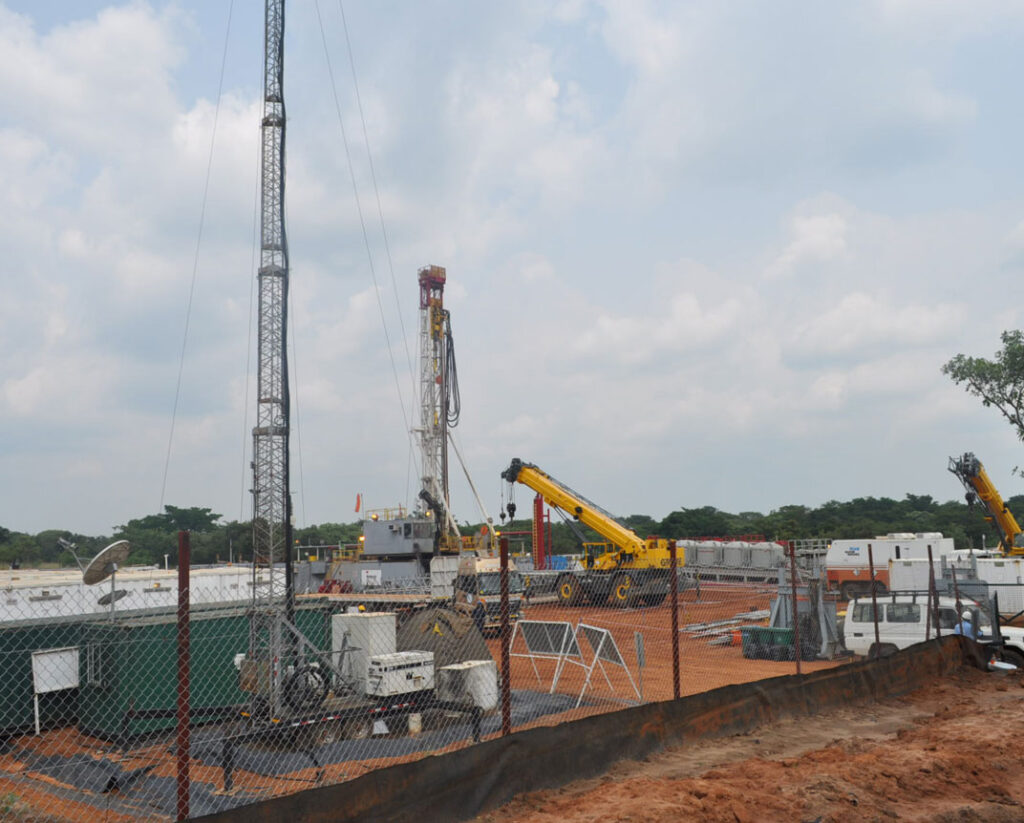
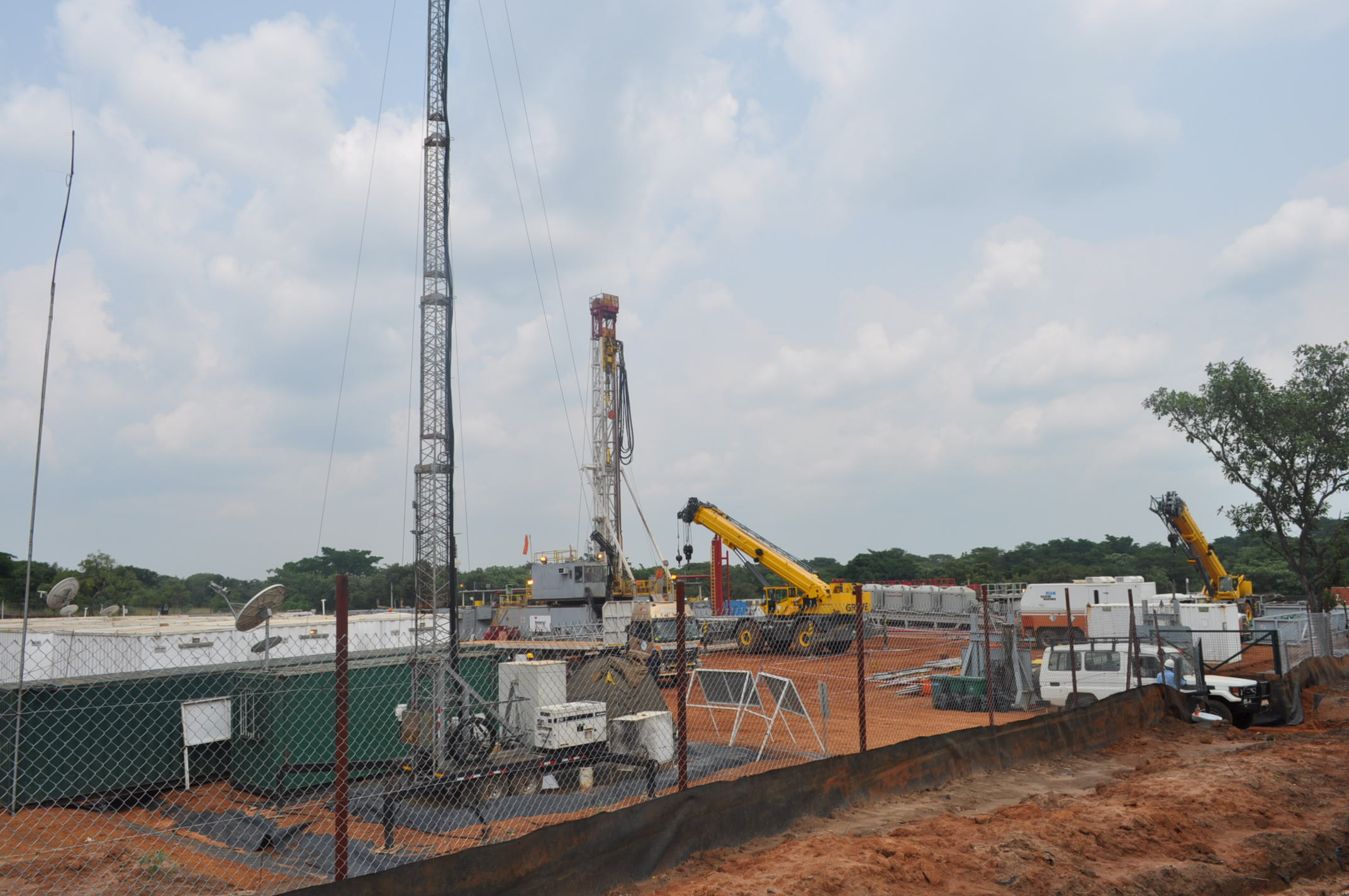
Oil firms, Total Energies and China National Offshore Oil Company (CNOOC) have been indicted in new environmental impacts reportedly emerging as construction works advance, especially for communities living in close proximity to oil sites, a new report has revealed.

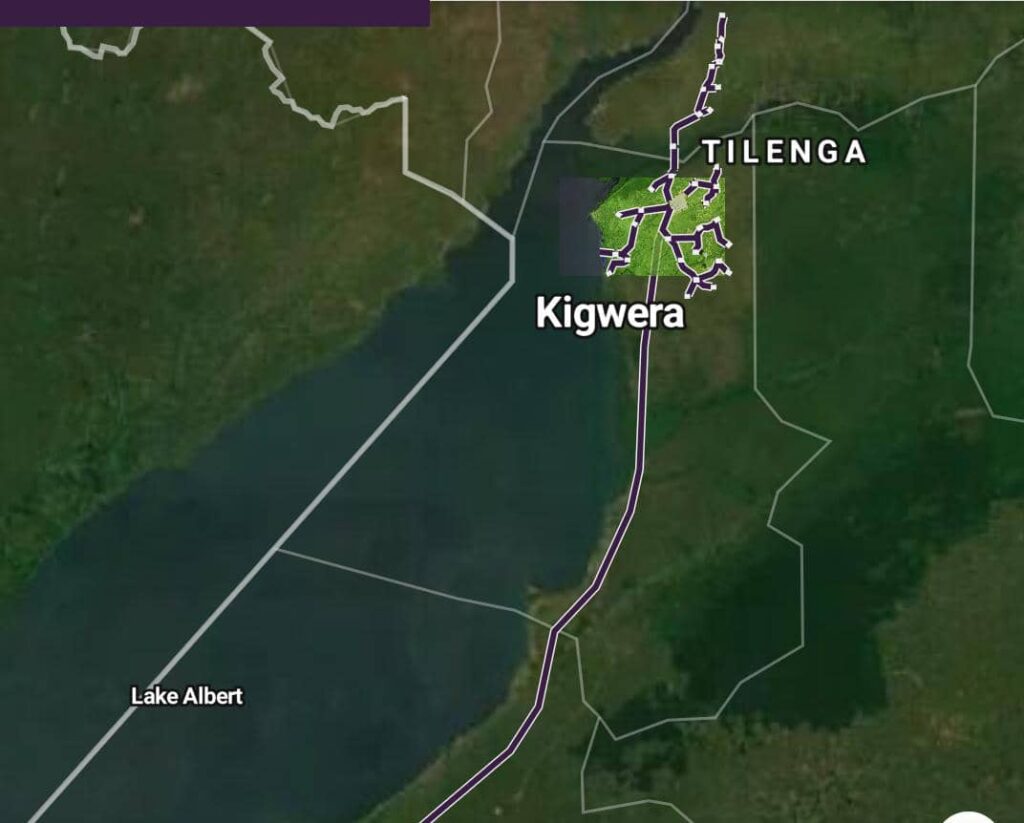
The report titled ‘HEATED: Human rights, frontline communities, and oil in Uganda’ shows that the Tilenga, Kingfisher and East African Crude Oil Pipeline (EACOP) oil projects have caused new harms for human rights, including labour rights violations and environmental degradation.

“Increased activity in the Murchison Falls National Park is believed to have led to frequent and sometimes deadly incursions by wild animals, creating additional stress and damages for villagers. Moreover, TotalEnergies has left hundreds of compensation requests unaddressed despite the serious damage caused by flooding linked to the construction of the central processing facility in Tilenga,” the report reads.

According to the report, the Environment and Social Impact Assessment (ESIA) reports for Tilenga and Kingfisher include extensive analyses of certain risks, including different forms of pollution, water contamination, and human-wildlife conflicts as well as a series of mitigation measures that can be used to minimise the negative effects of oil exploration, preparation, production, and well rehabilitation.

The projects are mainly owned and operated by TotalEnergies and the China National Offshore Oil Company (CNOOC) in cooperation with the governments of Uganda and Tanzania.

“Thousands of inhabitants were relocated to make way for oil development and oil-related infrastructure, but many others still live in immediate proximity to oil sites and report the negative effects, often linked to ongoing construction, the projects have on their day-to-day lives,” reads the report citing new roads, clearances, oil operation facilities and infrastructure, and drilling are altering the local ecosystem and people’s ability to go about their daily lives.

The report further reveals that the community regularly complains of the dust, noise, light pollution, and vibrations as well as more severe impacts like flooding, road accidents, and wildlife accidents which the communities suspect are linked to the oil projects.

The report cites information showing how the community members are experiencing the effects of insufficient mitigation efforts and the inadequate implementation of planned mitigation measures.

“Dust from heavy traffic along the newly cleared roads has been associated with respiratory problems reported in scientific literature and by regulatory agencies. These problems had been identified by Total Energies and CNOOC as a risk in their respective impact assessments,” says the report revealing how the two companies have inadequately implemented what they promised to mitigate the effects of dust through water mist.

The report further reveals that new oil facilities have been linked to floods affecting local communities over the past two years with the most serious floods linked to the Central Processing Facility in Tilenga.

This is where an important section of land was cleared and leveled thereby creating new flood patterns.

“Hundreds of flood victims have yet to receive compensation from TotalEnergies. Inhabitants lost their homes, livestock, crops, wells, boreholes, and many had to relocate for extended periods. The company has only responded to a limited number of requests for compensation, those from persons living in the immediate vicinity and closest to the source of the flood. Satellite imagery shows that the flooding affected areas for many kilometres downstream, however,” the report reads.

The report also warns that oil spills are a serious threat to the environment and public health.

“Any oil spill in Lake Albert, Lake Victoria, or Murchison Falls would have grievous consequences on the region’s exceptional ecosystem and the communities who rely on it. The watersheds for both lakes are vital to tens of thousands of people across East Africa. Because the oil wells and the pipeline are located in remote areas, cleanup activities are particularly challenging and compounded by the high wax content in the crude oil,” the report adds.

Authored by the International Federation for Human Right (FIDH), Avocates San Frontieres (ASF) and the Civic Response on Environment and Development (CRED) with funding from OXFAM, the report is a follow-up to community-based impact assessments of the Tilenga and Kingfisher oil sites and the EACOP.

Launched at the media conference held in Paris, France, the report extensively documents an uptick in state repression of human rights defenders in 2024.

The report shows that the accelerating construction of the EACOP, Tilenga and Kingfisher oil projects in Uganda has ushered in new human rights violations while it aggravated existing ones.

Sacha Feierabend, FIDH’s Senior Researcher on business and human rights said that the latest evolutions in the Albertine are a concern having displaced thousands of people thereby making oil development significantly transforming the realities of local communities.

“Construction works, high inflation, pressure on land, deployment of security forces, and influx of workers have a considerable, combined impact on human rights. All actors – companies, the government, but also financiers, insurers, and shareholders providing a financial lifeline to the projects – should assess their involvement and take urgent steps to ensure they do not fuel human rights abuses,” Sacha said.

In a press statement, the Executive Director of CRED, Bashir Twesigye said that the report reveals an environment where sexual and gender-based violence is on the rise. Near Kingfisher and Tilenga, prostitution of women is described as a growing phenomenon.

He said that underage girls are involved, which constitutes a form of sexual exploitation while women are suffering the most negative consequences of local economic transformations.

“New work opportunities linked to oil have been mainly reserved to young men, while fishing restrictions have taken a toll on a traditionally male economic activity. Women and girls face stronger pressure to provide for their family while being largely excluded from the benefits of oil development,” he said.

Ugandan lawyer, Michael Musiime said that documented challenges linked to relocation programmes in Tilenga, including cases of inadequate compensations, lack of information and lengthy delays in compensation have continued along the EACOP.

While appealing for fairness, Musiime, also the Coordinator for Natural Resource Governance at Avocats Sans Frontières claimed that the Ugandan government has started expropriating the remaining households in expedited court procedures.

“Article 26 of Constitution provides a progressive legal framework that protects the right to private property and limits the state’s power to acquire and take possession of property for public use before paying compensation to the owner. The government has recently attempted to amend this position, and recent court cases have allowed the authorities to get access to contested property as soon as compensation is deposited in court. This has a direct impact on the principle of free, prior and informed consent as well as access to justice for affected communities,” he said.

Email: ekasozi333@gmail.com
2 years ago · · Comments Off on Anger as Survey report lists NFA as claimant for Bugoma Forest land

Anger as Survey report lists NFA as claimant for Bugoma Forest land

Summary: The Bugoma forest boundary opening report has no findings, recommendations and conclusion by the surveyors as a call on the government to solve the protracted legal battle between NFA, Hoima Sugar Limited and Bunyoro-Kitara Kingdom

By JALIRA NAMYALO

The survey report for the boundary opening of Bugoma Central Forest Reserve in Hoima and Kikuube districts has angered conservations who have described as a ‘sham’.  

Conservationists under the Save Bugoma Forest Campaign say that the boundary opening report for the forest reserve does not provide a conclusive finding on whether Hoima Sugar Limited (HSL) encroached on Bugoma CFR land.

They have asked the government to re-think its position on Bugoma forest reserve give away and land grab in order to save the integrity of the conservation.

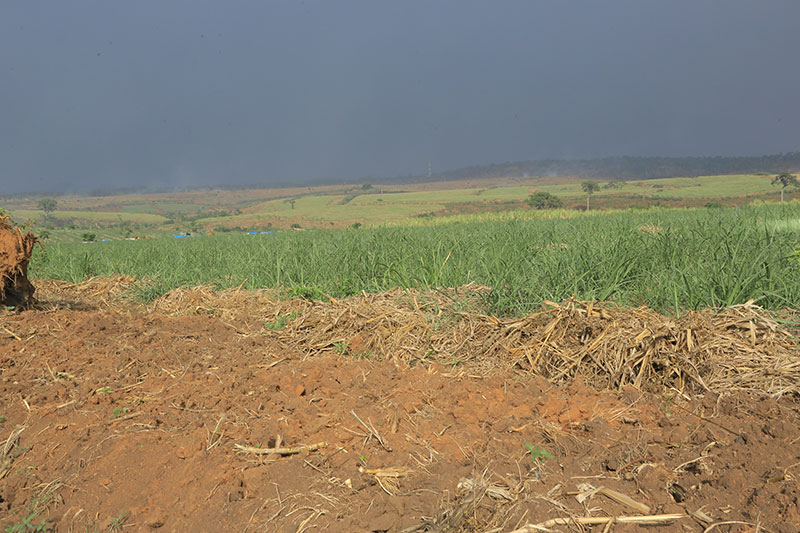
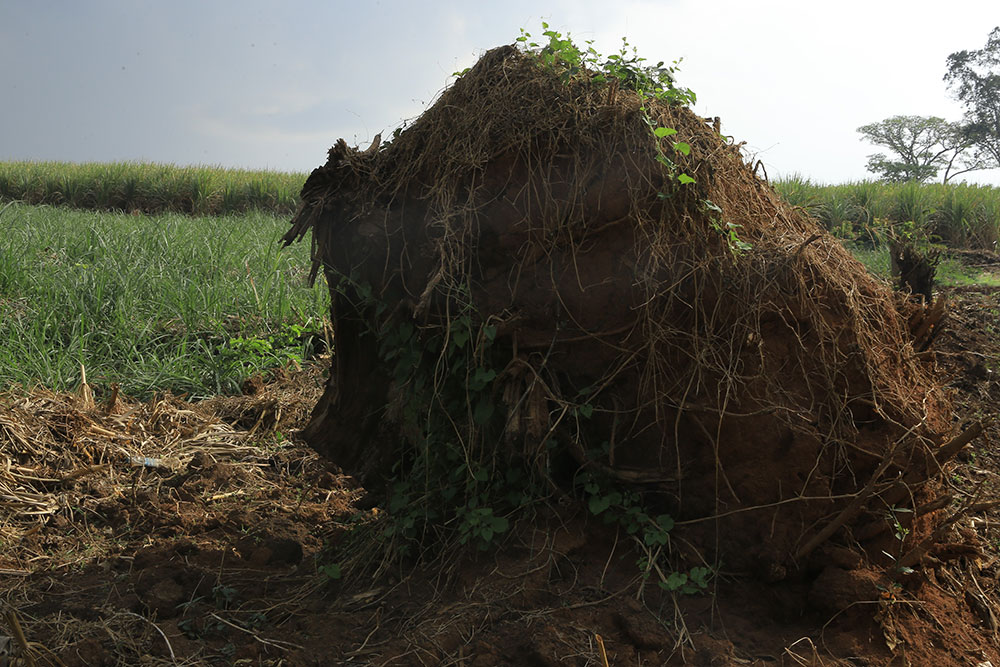
A tree destroyed to give way for sugar cane growing

In a statement issued, the conservationists say that the boundary opening report relies on illegally obtained certificates of registrations, the illegal Environmental Social Impact Assessment (ESIA) certificate, the search statement, and court judgments to reach a finding that Hoima Sugar Ltd is utilising land leased to it by the Omukama of Bunyoro Kitara Kingdom (BKK), without determining whether that land is within the Bugoma CFR gazetted area. 

Godfrey Twesigye, the team leader at Water and Environment Media Network Uganda says that the report falls short of the expectations and does not solve the issue at hand but rather seeks to validate the illegal land grab under the guise of Bugoma forest reserve.

The report dated November 30, 2023 was forwarded by the Minister of Lands, Housing and Urban Development (MLHUD), Judith Nabakooba to the Minister of Water and Environment following a cabinet directive but it has never been made public.

The directive tasked the Lands surveyors to open the boundaries of Bugoma forest reserve to determine whether Hoima Sugar Limited (HSL) encroached on the forest land and to resolve other pending boundary verification exercises ordered by the court to ensure the conservation of the forest.

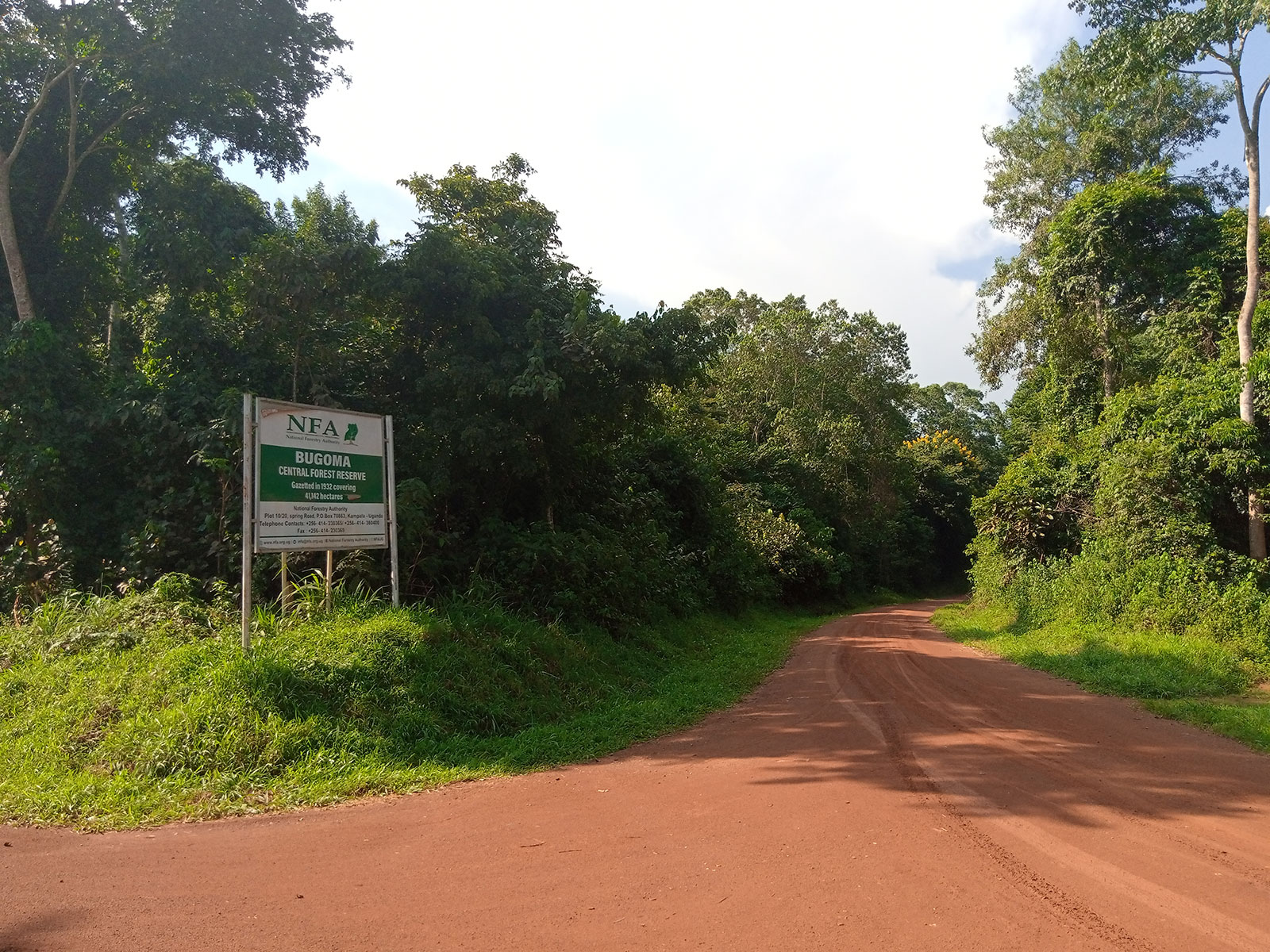
The report shows that National Forestry Authority (NFA), a government body mandated to protect forest reserves is a claimant among the 23 others claiming proprietorship of various parts of Bugoma Central Forest Reserve land.

Titled “the boundary opening report for Bugoma Central Forest Reserve” the government document shows that NFA claims for approximately 41,144 hectares of land with 132.5 Km of boundary cutline while 44.5 kilometers of the boundary is marked by natural features including rivers; Nkusi  Nyakatete and Kamugamba.

The report indicates that the NFA claim is based on the statutory instrument number 63 of the forest reserves declaration order of 1998, forest maps on reference number BN/63, map sheet reference 47/2, 4; 48/1, 3 as well as boundary plans Bp. 1507 and 1637.

“The perimeter is witnessed by the majestic concrete pillars standing 1.1 meters above ground level. The boundary plans have clearly marked turning points and boundary plans compute to a total area of 39,492,620 hectares,” reads part of the report.

Compiled by the Ministry of Lands, Housing and Urban Development, the report further shows that Hoima Sugar Limited has 5,779.7 hectares (14,281.64 acres) in Kyangwali estate.

Part of Bugoma forest turned into sugar cane plantation

It shows that the basis for Hoima Sugar Limited’s claim is based on the copy of certificate of title, copy of search statement dated June 10 2021 and the Environment and Social Impact Assessment (ESIA)  by National Environment Management Authority (NEMA) as well as a High Court judgement in the case between NFA against Hoima Sugar Limited and Bunyoro Kitara Kingdom at Masindi.

Other claimants include; Atugonza Francis with a customary claim of 1,318 hectares (3,256.78 acres), Bitarabeho Shaban of Shabi Trading Company Limited (35.845 hectares), Balihamwe Rajab (150 acres), Mugenyi Ephraimu (377.167 Hectares), Rwemera Mazirane Emmy (600 hectares), Byaruhanga Matia, Mutekaniza Fred and Isingoma Isaac claim for 517 hectares while Kasaija Serevesti and Semate Crestom with each claiming for 500 acres.

Also on the list are; Mustafa Zaidi of MZ Agencies claiming for 2000 hectares (4,942 acres) at Kisaru, 296.5720 hectares (732.83 acres) at Nyangabi- Kimbugu and 662.3484 hectares (1,636.663 acres) at Nyaigugu. 

Acceding to the list, Tusabomu Gerald, Kiwanuka Richard and others claim for 500 acres at Nyairongo Rwenkobe villages, Rev Joachim Mugisa Ateenyi (150 hectares, 200 acres at Kitakara in Kyangwali; Tulipona Veteran’s Association (2000 acres), Kaganda Muhammadi (60 acres) Ruralya John (500 acres), Omuhereza Murungi, Migisa Murungi and Kusemererwa Murungi (72.969 hectares), Kato Alfred, Komukyeya Doreen and Kyebambe Ruth claim for 1,221 acres and Prince Fred Mugenyi Roland and others claim for 2sq miles at Katikara and Ngogolo villages.

The report shows that the claimants are holding customary documents while others have offer letters from the office of the Omukama of Bunyoro Kitara kingdom.

Other claimants holding land titles in the forest are; Kyenkya Margaret (342.2 hectares) Bugoma Jungle Lodge (9.311 hectares), Turyamureba Shaban (35.845 hectares), Rutalo Francis Xervia (153.632 hectares, 57.9 hectares and 40.490 hectares.

The permanent secretary in the Ministry of Water and Environment, Alfred Okidi Okot says that he was unable to discuss issues regarding the report.

“…at an appropriate moment, the government shall make that report public,” he said in a telephone interview.

The chairperson of the Save Bugoma Forest Campaign, Dickens Kamugisha says that they are dismayed that the report does not provide a definitive finding on whether Hoima Sugar Limited encroached on Bugoma CFR land. 

Mr Kamugisha also the Executive director of the Africa Institute for Energy Governance (AFIEGO) “The government’s failure to definitively address the encroachment issue is concerning. We urge a thorough investigation to ensure the conservation of Bugoma CFR.” 

The conservationists have now asked the government and all relevant bodies to address the gaps in the survey and boundary opening report to urgently address the gaps in the survey and make positive recommendations for the conservation of Bugoma CFR land.

Task surveyors to make a conclusive finding as per the Terms of References regarding Hoima Sugar’s encroachment on Bugoma forest; cancel all illegal and fraudulent land titles in forested and protected reserves and the boundary survey report must show whether the forest land still exists and, if not, where part of the forest land is,” they said.

According to the statement, government should preserve Bugoma forest as it is, and do not use boundary exercises as excuses for cutting parts of the rain tropical forest and that authorities should stop intimidating activists challenging the illegal giveaway of forest land with trumped-up charges to silence them.

“Corruption hindering conservation efforts should be tackled, especially prosecuting those issuing illegal certificates in forest lands without parliamentary de-gazetting and rconsider the management of forests in Uganda, particularly in light of the pending merger of Ministries Departments and Agencies (MDAs),” reads the statement.

Ms Juliet Mubi, the Public relations officer at NFA said she was not aware of the report. 

But officials at the NFA who declined to be named described the report as a scheme to validate illegalities and grabbing of Bugoma forest land.

“That report is vague and of no effect. How can you turn the custodian into a claimant and what is now the intention of that vague report?” the source asked.

According to the source, the report is a waste of resources provided jointly by the government and the development partners which cost is more than Shs300 million. 

jalirajuma@gmail.com

2 years ago · · Comments Off on Protect wetlands for sustainable development, minister appeals

Protect wetlands for sustainable development, minister appeals

Summary: Wetlands deliver a wide range of ecosystem services that contribute to human well-being such as fish, water supply, water purification, climate regulation, flood regulation, recreational opportunities, and increasingly tourism

By EPHRAIM KASOZI

Government has asked Ugandans to make conscious choices to stop polluting wetlands because of the multiple benefits and nature-based solutions they provide for human well-being and a healthy planet.

Samuel Cheptoris, the Minister of Water and Environment appealed for the restoration of the lost and degraded wetlands to revive the rich biodiversity and life found in these life-sustaining ecosystems.

“…despite the numerous benefits that humans receive from wetlands and concerted efforts by Government to conserve wetlands, 3 every day wetlands are damaged by human beings. Wetlands are being destroyed by unsustainable agricultural practices which are a primary cause of wetland loss through drainage and infilling,” said Mr Cheptoris in a statement regarding the commemoration of world wetlands day.

He revealed that wetlands’ decline recorded between 1994 and 2015, were 6,146.6 sq.km of wetlands was lost; 2.5 percent of Uganda’s total coverage of wetlands which caused concern and drastic measures had to be undertaken to avert further decline.

Cheptoris said that the government has made timely concerted effort over the last 30 years at various national levels to ensure the conservation and wise use of wetland resources.

“This year Government has taken further decisions to scale up actions on wetland conservation that includes but not limited to cancelling of wetland titles, restoration of degraded wetlands, strengthening of compliance monitoring and enforcement and provision of alternative livelihood to wetland users to bring the process of wetland conversion under control,” he added.

Cheptoris said that communities particularly those living near wetlands, are highly dependent on these services and are directly harmed by their degradation.

“Wetlands and people are ‘life interlaced’. Wetlands are central to our wellbeing. Wetlands deliver a wide range of ecosystem services that contribute to human well-being such as fish, water supply, water purification, climate regulation, flood regulation, recreational opportunities, and increasingly tourism,” he said.

According to the minister, as Uganda aspires to become an upper middle-income country and, to achieve ‘sustainable industrialization for inclusive growth, employment and wealth creation, it would require investments not only in produced and human capital, but also in natural capital that includes wetlands resources.

National Coordinator at the Climate Action Network Uganda (CAN-U), Mr Anthony Wolimbwa attributes to the decline in the wetlands to poor governance of wetland resources coupled with lack of separate legislation for wetlands.

“We do not have a direct wetland law and the government is using the National Environment Management (NEMA) Act which is a framework law, Failure to have a specific law to regulate wetlands is a very big challenge,” he says.

Wolimbwa says that most of the wetlands are being given to investors by the very government; “So the government prefers the investors to destroy wetlands because they think investors bring in ready cash and they do not seem to see any value that wetlands provide.”

He accuses the government people especially the investment side of looking more into having more investors thinking that they can provide more jobs, taxes and more cash to the economy but at the expense of wetland protection.

On February 2 this year, Uganda joined the rest of the world to celebrate World Wetlands Day, denoting the date of the selection of the Convention on Wetlands on February 2, 1971.

ekasozi333@gmail.com

Bugoma forest: The high conservation area getting extinct

2 years ago · · Comments Off on Bugoma forest: The high conservation area getting extinct

Bugoma forest: The high conservation area getting extinct

Interview on Bugoma forest

Conservationists of the environment have demanded the government to release; make public and implement the boundary opening of Bugoma Forest 

By Jalira Namyalo

The unabated destruction of the green belts across the country has claimed large tracts of land comprising of Bugoma Central Forest Reserve in the Midwestern region, conservationists have cried foul.

Environment activists say that the country’s tropical forest is under eminent threat of destruction despite the long wait for survey report.

Records show that the government through the Ministry of Lands, Housing and Urban Development completed the boundary opening exercise in August 2022 but to date no report has been released and or made public.

The boundary opening exercise followed a cabinet directive issued in 2019 to open the boundary as a measure to resolve the protracted dispute between National Forestry Authority (NFA), a government body and the Bunyoro- Kitara – Kingdom jointly with the Sugar firm, Hoima Sugar Limited.

The dispute awaits hearing and determination before the Court of Appeal.

Latest-degradation-in-Bugoma-central-forest-reserve

Mr Dennis Obbo, the Spokesperson of the Ministry of Lands said that they completed the report and submitted to cabinet. 

The Conservationists describe the delay in the release of the Bugoma forest survey report as ‘double standards’ saying that government on one hand tells the oil and gas sector to protect and conserve the environment while at the same time allows the sugar sector to destroy the environment.

They say that by allowing the sugar companies to go ahead to destroy the bio-diversity in the forest reserve is very controversial. 

Mr Gaster K. Kiyingi, the team leader of Tree Talk Plus says that the boundary opening exercise conforms to the original boundaries. 

“I have not seen the report but that is what I know. I have been at NFA; I have worked with them but much as they will say that NFA have lost the integrity with forest officers and forest resource managers, the documents are there. A certified surveyor picks the coordinates and goes on ground but to your dismay and to the dismay of all of us, we will find the boundary as stated in the 1930s and nothing has changed,” he argues.

Kiyingi questions: “Why haven’t we re-surveyed Mabira, or any other forest reserve?  Why do we contest only Bugoma? Bugoma is not under contestation, nobody doubts apart from the government, Bunyoro Kingdom and Hoima Sugar Limited. They went in and they are almost adulterating the boundary often times to satisfy their interests.” 

According to Mr Kiyingi, if you ask NFA, they will produce you a boundary map which was conceived and mapped out in 1930s. 

“Since then the forest has been intact, nobody has disputed the boundaries of Bugoma forest until now. Why is it now? The people concerned; Hoima sugar Limited, Bunyoro Kitara- Kingdom also knows this issue of boundary opening is to buy time so as they continue destructing the forest reserve. Because the boundaries are known, we should not be wasting time,” he explains.

He laments: “Whatever government is doing, we leave it to government to tell us. We lose one of the high conservation areas, with high conservation value. We lose the ecosystem with a high conservation value and area. When you look at Bugoma, it sits on the land with a land scape and it harbours a number of bio-diverse eco-system; flora and fauna but this country of ours have decided that we do not want the forest.”

Mr Kiyingi says that instead of defending the forest, the country is pursuing the sugar line yet the sugarcane in Kinyara and Lugazi is enough for Ugandans. 

“Those involved in the purchase, sell and distribution of sugar know where the sugar goes. The sugarcane grown now in Bugoma is not ready for harvest, it is still juvenile but after three-four years, it will be marketable. If your go to Saudi Arabia, you will find Ugandan Sugar.”

The National Coordinator at the Climate Action Network Uganda (CAN-U), Mr Anthony Wolimbwa says that the (forest) land belongs to government of Uganda under trust as a central Forest reserve much as there is an area that is claimed by the Bunyoro-Kitara Kingdom that has brought in a lot of conflicts. 

“We had a lot of challenges in conserving Bugoma Forest Reserve with encroachment and investors who want to take part of the forest to grow sugarcane but also the local communities’ encroaching on the same land,” he says.

There have been claims of who owns what part of Bugoma forest but Mr Wolimbwa says that even if that land has all the types of ownerships, the country’s interest is to have the totality of that land under conservation because Bugoma forest is a hotspot for some of the endangered species. 

“Therefore any act of taking any part of it will jeopardise the integrity of that forest reserve because environmental issues do not respect boundaries and the replacement of it shall be problematic. You cannot have the same elsewhere due to its uniqueness. In economics it may work but in nature it cannot work,” he says.

According to Mr Wolimbwa, the country have a lot of developments in the Bugoma Forest area including oil and gas that require a lot of resources especially water which is going to be drawn around there. 

“The whole of Albertine region is one of the highest tourism potential areas and tourism brings a lot of money. So you cannot destroy such a resource which cannot be replaced anywhere and it contributes immensely to the economy of Uganda.”

Mr Wolimbwa says that failure by government to release boundary opening report raises a lot of questions and challenges.

“We are not sure why this has delayed. Could there be a conflict of interest among people within government. Could it have been captured by commercial interests or, what are they trying to guard by not revealing the report or if the boundary has been opened and the report is still not yet out, are there fears of unresolved matters that have not been brought forward.”

jalirajuma@gmail.com

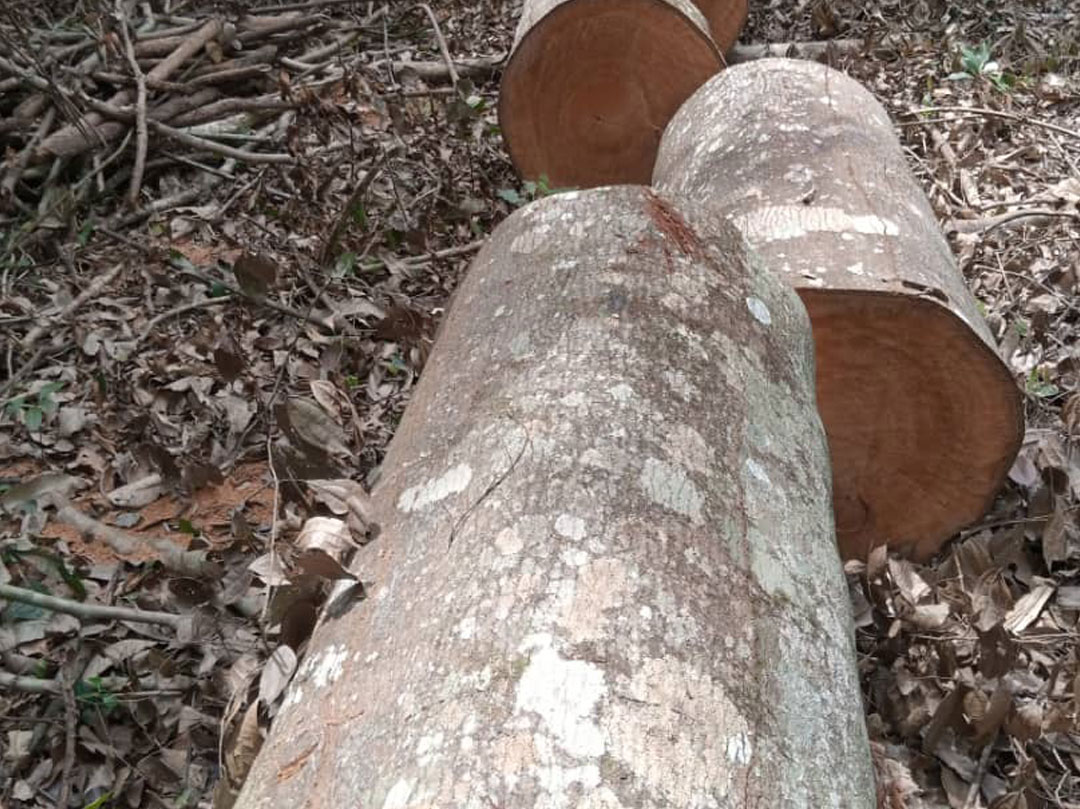
Trees being cut down in Bugoma forest.

7 years ago · · 51 comments

It is illegal to develop a wetland, says court

It is now everyone’s responsibility to protect wetlands after the highest court of the land ruled that protecting the environment is commanded by the Constitution.
“This is a matter that is of interest to and impacts on the community as a whole. The individual’s interest must be viewed in the context
of that larger interest of society as a whole and in the context of the Constitution and the laws made there under,” the Supreme Court held.
In the 6-1 majority decision, that dismissed an appeal in which Kampala Central Division boss, Amooti Godfrey Nyakaana was challenging the legality of National Environment Management Authority- NEMA in demolishing his house over a decade ago, Chief Justice Bart Katureebe held that the right to a clean and healthy environment enshrined in the Constitution must be protected by the state.
“Individual developers putting up houses in such a critical wetland unregulated by the National Environment Management Authority (NEMA) may have grave consequences in future,” held Chief Justice Katureebe.
“We are dealing with a grave matter of protecting the environment as commanded by the Constitution,” Justice Katureebe ruled.
Activists say that members of the public including civil society organisations can use the court decision to protect the environment and advocate for legally approved friendly developments. 

IS THE BAN ON KAVEERA A LAME DUCK?

8 years ago · · 0 comments

IS THE BAN ON KAVEERA A LAME DUCK?

Civil society activists are concerned that the total ban on polythene carrier bags, also known as Kaveera, will ever be effectively enforced. The ban was recently passed by cabinet. But going by recent pronouncements, activists say it is difficult to see any commitment by government in upholding the ban.
A case in point is the latest cabinet ministers’ meeting which resolved to support the ban on polythene carrier bags.
In June the prime minister who is the head of government business put a halt on the enforcement of the Kavera burn whict attracted criticism from sections of society.
While, the head of Action Coalition on Climate Change a None-Governmental Organization, Enock Nimpamya has welcomed the move, it is with reservations.
Nimpamya says given the adverse environmental implications resulting from the use of polythene materials, a total ban on polythene bags is a good direction by government. However he is doubtful whether the National Environmental Management Authority (NEMA) can enforce it.

How population pressure on land in Rwanda impacts on forests in Uganda

9 years ago · · 1 comment

How population pressure on land in Rwanda impacts on forests in Uganda

It is a bright sunny morning in a freshly opened up patch of land inside Kanaga Central forest reserve, deep in Kibaale district.
The cleared up place is about 500 square meters, with gardens of beans, maize and cassava. In between the gardens, stand huge burnt out tree stumps and felled logs that appear to have been cut over a year ago.
A close walk reveals newly constructed makeshift ant hill-like structures, scattered all over the heart of the central forest reserve.
Most of the makeshift structures are covered with grass and old tarpaulins and provide the living quarters for the forest encroachers.
In front of one makeshift tent lies a young girl, Trifonia Tumuramye, 13. She is lying on a mat and covers herself with a cloth. Dirty sauce pans and jerry cans are scattered around the compound.
Her mother, Mediathese Ntamuhera, 34 sits beside her daughter with a sorrowful look. Ntamuhera is one of hundreds of Rwandese, who found a soft landing in Uganda after fleeing land pressure in Rwanda. And that soft landing is in the forests of Uganda, especially those in the Bunyoro sub region, particularly Kibaale district. The area is home to Uganda’s 16 gazetted forest reserves.